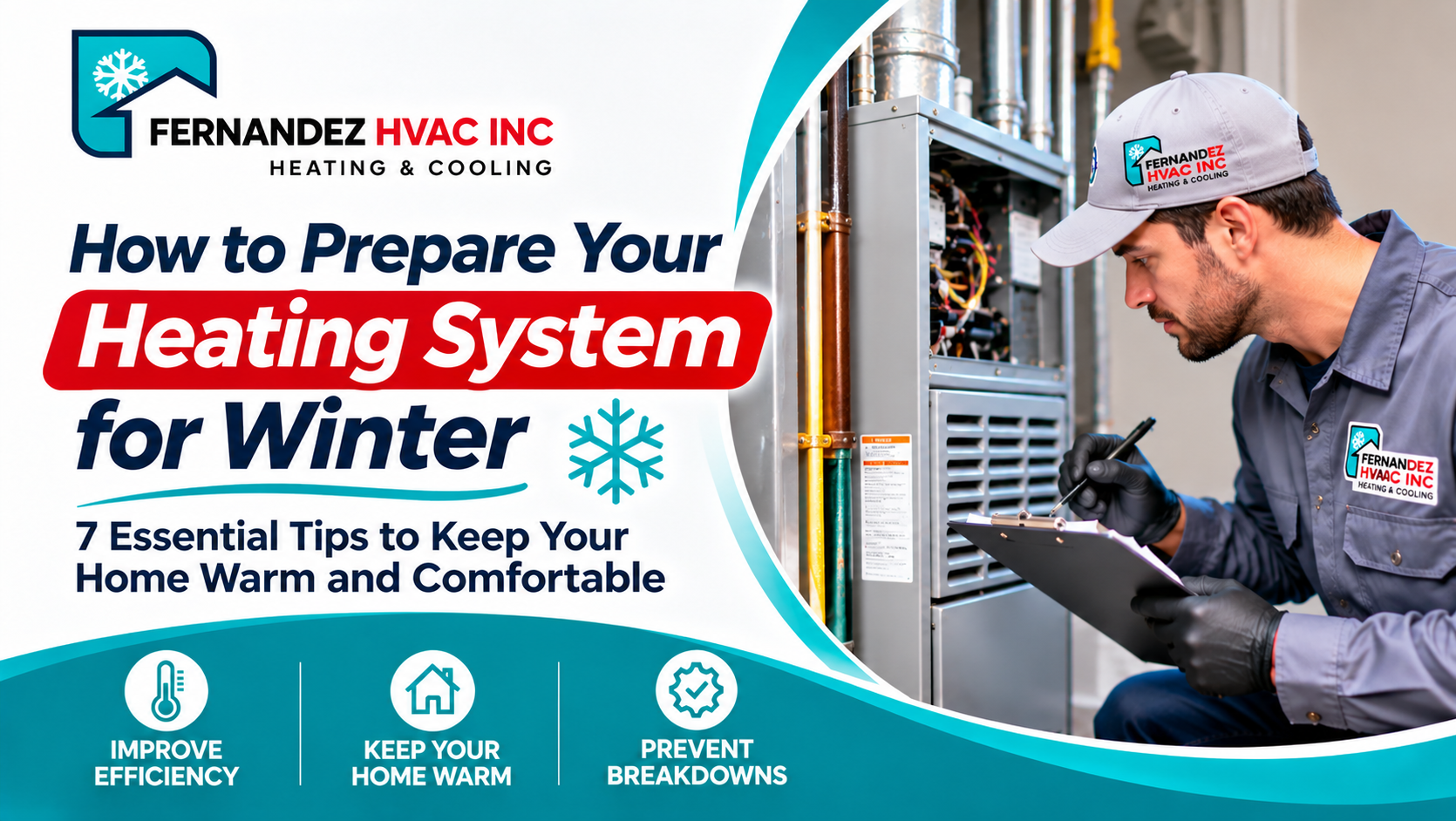
How to Prepare Your Heating System for Winter: 7 Essential Tips
As temperatures begin to drop, is your home ready for the cold winter months? Knowing how to prepare your heating system for winter can make a big difference in your comfort, energy efficiency, and peace of mind. A poorly maintained heating system could leave you dealing with unexpected breakdowns when you need it most.
Whether your home relies on a gas furnace, an electric heating system, or a heat pump, taking a few preventive steps now can help you avoid costly surprises later.
But where should you start? What should you check before turning on your heating system?
In this guide, Fernandez HVAC shares 7 essential tips to help you get your heating system winter-ready, prevent common problems, and keep your home warm and comfortable throughout the season. Keep reading to discover what you should do before the temperatures drop!
How to Prepare Your Heating System for Winter: Why It Matters
Your heating system works harder during the colder months, especially when temperatures drop significantly.
Without proper maintenance, dust buildup, restricted airflow, worn components, and thermostat problems can affect how well your system operates.
Preparing your heating system before winter can help you:
- Identify potential problems before temperatures drop.
- Maintain consistent indoor temperatures.
- Improve heating system performance.
- Support better energy efficiency.
- Reduce the likelihood of unexpected repairs.
- Help maintain a comfortable indoor environment.
Scheduling preventive HVAC maintenance before the heating season begins is one of the best ways to prepare your home for colder weather.
7 Essential Winter Heating System Maintenance Tips
Follow these seven recommendations to help your heating system operate properly throughout the winter.
1. Schedule Professional Heating System Maintenance
One of the most important steps is scheduling a professional heating system inspection before winter.
During a maintenance visit, an HVAC technician can inspect important components, identify potential issues, and verify that your equipment is operating safely.
Depending on your heating system, professional maintenance may include:
- Inspecting electrical connections and controls.
- Checking thermostat operation.
- Inspecting the blower motor and fan components.
- Checking burners and ignition components on applicable furnaces.
- Inspecting the heat exchanger for signs of damage.
- Checking the ventilation and exhaust system.
- Evaluating overall heating performance.
For gas furnaces, inspecting combustion components and venting is particularly important for safe operation.
Why does this matter?
A professional inspection can identify developing issues before your heating system is needed every day. It also helps ensure that important components are operating according to manufacturer specifications.
2. Replace or Clean Your HVAC Air Filter
Your air filter plays an important role in maintaining proper airflow throughout your heating system.
Over time, dust, dirt, pet hair, and other airborne particles accumulate in the filter. A clogged filter can restrict airflow, making your heating system work harder and potentially affecting its performance.
Before winter begins:
- Check your air filter for visible dirt and dust.
- Replace disposable filters when necessary.
- Clean reusable filters according to the manufacturer’s instructions.
- Check your filter regularly during the heating season.
Most homeowners should inspect their filters monthly. Replacement frequency depends on the filter type, household conditions, and manufacturer recommendations.
Pro Tip: Keep replacement air filters available at home so you can change them when needed.
3. Test Your Thermostat
Your thermostat controls when your heating system turns on and off to maintain your desired indoor temperature.
Before winter arrives, check that your thermostat is functioning properly.
Here are a few things to do:
- Switch the thermostat to “Heat” mode.
- Set the temperature above the current indoor temperature to test the heating cycle.
- Check whether the display is working correctly.
- Replace the batteries if necessary.
- Review your programmed heating schedule.
If you have a programmable or smart thermostat, consider creating a schedule that adjusts temperatures when you are sleeping or away from home.
A properly functioning thermostat helps maintain comfort and gives you better control over your heating system.
4. Keep Your Heating Vents and Air Returns Clear
Proper airflow is essential for distributing warm air throughout your home.
Furniture, rugs, curtains, and other household items can accidentally block supply vents and return air registers.
Before the heating season:
- Check that supply vents are open and unobstructed.
- Move furniture away from heating registers.
- Make sure return air vents are not blocked.
- Remove visible dust around vent openings.
Blocked vents can restrict airflow and make it harder for your HVAC system to distribute heat evenly.
If some rooms remain colder than others, your system may need a professional airflow evaluation.
5. Inspect Your Outdoor Heat Pump Unit
If your home uses a heat pump, the outdoor unit is an important part of your heating system.
Heat pumps transfer heat from the outdoor air into your home during the heating season. Keeping the outdoor unit clear helps maintain proper airflow.
Before winter:
- Remove leaves, branches, and debris around the unit.
- Trim vegetation that may interfere with airflow.
- Keep the manufacturer’s recommended clearance around the equipment.
- Check that the unit is not obstructed.
During snowy or icy weather, make sure snow and ice do not block the outdoor unit’s airflow or required clearances.
Never chip ice from the equipment or attempt to remove internal components yourself. Contact an HVAC professional if the unit develops persistent ice buildup or does not operate normally.
6. Check Your Home’s Heating Safety Devices
Heating system preparation is not only about comfort and efficiency. Safety should also be a priority.
Fuel-burning heating equipment, including gas furnaces, can produce carbon monoxide (CO) if it is improperly installed, poorly maintained, or has blocked or defective venting.
Carbon monoxide is colorless and odorless, making it difficult to detect without an alarm.
Before winter:
- Test your carbon monoxide detectors.
- Check smoke alarms throughout your home.
- Replace batteries when needed.
- Make sure alarms are installed in the recommended locations.
- Keep furnace intake and exhaust vents clear of debris, snow, and ice.
If a carbon monoxide alarm sounds, leave the home immediately, get to fresh air, and contact emergency services. Do not re-enter until authorities say it is safe.
Never attempt to repair gas connections, burners, or furnace combustion components yourself.
Maintaining good indoor air quality is another important part of preparing your home for winter. The Environmental Protection Agency (EPA) offers useful guidance on how to improve indoor air quality and reduce common household pollutants. You can explore its recommendations in the EPA’s Indoor Air Quality resources.
7. Check for Unusual Heating System Warning Signs
Before winter arrives, pay attention to how your heating system operates.
Small changes in performance can indicate that something needs attention.
Watch for these warning signs:
- Unusual banging, rattling, or grinding noises.
- Weak airflow from heating vents.
- Rooms that do not reach the desired temperature.
- Frequent heating system cycling.
- Unexpected increases in energy bills.
- A furnace that struggles to start or stay running.
- Unusual odors that persist or return after initial startup.
If you notice any of these issues, schedule a professional HVAC inspection.
Addressing problems early can help prevent additional equipment damage and unexpected heating interruptions during the coldest months.
How to Prepare Your Furnace and Heat Pump for Winter
Yes. Although both systems provide heating, furnaces and heat pumps operate differently and have different maintenance considerations.
Gas and Electric Furnaces
Furnaces generate heat and distribute warm air through your home’s ductwork.
Important maintenance considerations include:
- Air filter replacement.
- Blower and airflow inspection.
- Thermostat testing.
- Burner and ignition inspection for gas models.
- Heat exchanger and exhaust vent inspection for applicable systems.
Heat Pumps
Heat pumps transfer heat rather than generating it through combustion.
Important maintenance considerations include:
- Keeping the outdoor unit clear.
- Checking airflow and air filters.
- Inspecting electrical connections.
- Verifying thermostat and operating controls.
- Checking the system’s heating performance.
Both types of equipment benefit from regular professional maintenance.
When to Schedule Winter Heating System Maintenance
The best time to schedule heating system maintenance is during the fall, before temperatures become consistently cold.
Waiting until winter can mean longer appointment wait times, especially when HVAC companies experience increased demand.
An annual pre-season inspection gives a technician the opportunity to evaluate your equipment before it enters its busiest operating period.
If your heating system has not been serviced recently, consider scheduling an appointment before you depend on it every day.
Professional Heating Maintenance Services from Fernandez HVAC
Getting your heating system ready for winter does not have to be complicated.
At Fernandez HVAC, we understand how important a reliable heating system is for your family’s comfort during the colder months.
We provide professional heating services to homeowners throughout Virginia, Maryland, and Washington, D.C., helping keep their homes warm and comfortable during the colder months.
Our team can help inspect your heating equipment, identify potential problems, and recommend appropriate maintenance or repair solutions.
Whether you have a furnace or a heat pump, our goal is to help keep your home comfortable and your HVAC system operating properly.
Don’t wait until the cold weather arrives to discover a heating problem.
Contact Fernandez HVAC today to schedule your heating system maintenance and prepare your home for winter.
Fernandez HVAC Inc. – Our Experience in Your Hands.
Frequently Asked Questions (FAQs)
1. How do I prepare my heating system for winter?
Start by scheduling professional HVAC maintenance, checking your air filter, testing your thermostat, clearing heating vents, inspecting your outdoor heat pump unit if applicable, and testing your smoke and carbon monoxide alarms.
2. When should I schedule furnace maintenance?
Fall is generally the best time to schedule furnace maintenance, before temperatures drop and your heating system becomes essential for everyday comfort.
3. How often should I change my furnace air filter?
Check your air filter monthly. Depending on the filter type and household conditions, replacement may be needed every one to three months or according to the manufacturer’s instructions.
4. Is annual heating system maintenance necessary?
Annual professional maintenance is recommended for most residential heating systems. It allows an HVAC technician to inspect important components, check system operation, and identify potential problems.
5. What temperature should I set my thermostat in winter?
A commonly recommended starting point is around 68°F while you are awake and home, adjusting for personal comfort and household needs. You can lower the setting while sleeping or away if appropriate for your home and heating system.
6. What are the signs that my furnace needs maintenance?
Common warning signs include unusual noises, weak airflow, uneven heating, frequent cycling, persistent unusual odors, and difficulty maintaining your desired indoor temperature.
7. Can I prepare my heating system for winter myself?
Homeowners can perform basic tasks such as checking air filters, testing thermostats, keeping vents clear, and testing safety alarms. However, combustion components, gas connections, electrical components, and internal equipment inspections should be handled by qualified HVAC professionals.
Do not wait for freezing temperatures to find out your heating system needs attention.
Contact Fernandez HVAC today for professional heating maintenance and repair services.
Your Comfort Is Our Priority!


Recent Posts