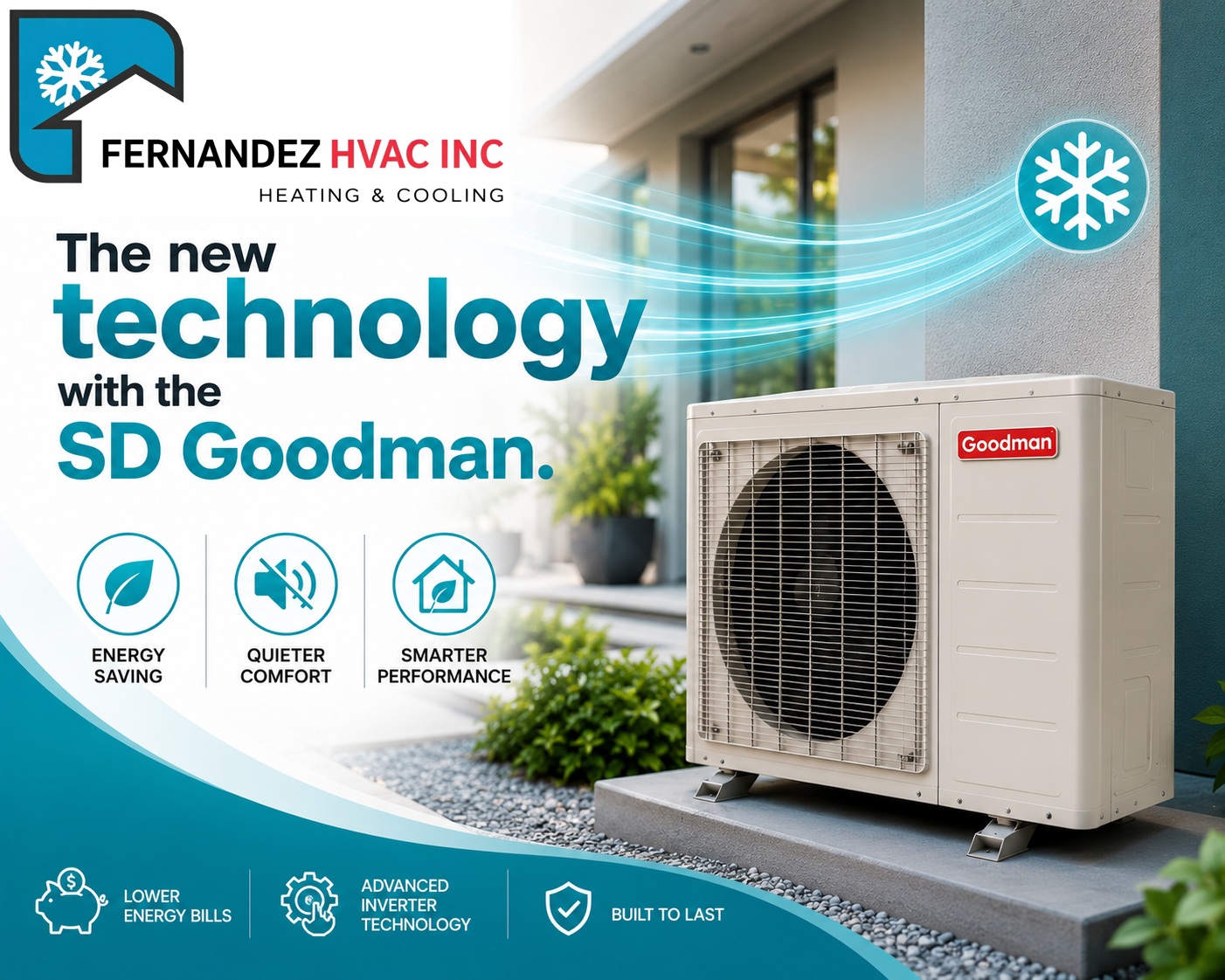
How Does the SD Goodman Inverter Help Reduce Energy Consumption? (2026 Guide)
As energy costs continue to rise, homeowners are looking for smarter HVAC systems that deliver comfort without driving up utility bills. One technology gaining attention is the Goodman SD inverter system, designed to improve efficiency, reduce energy waste, and maintain consistent indoor temperatures year-round.
But how exactly does the Goodman SD inverter help reduce energy consumption? Let’s break it down.
What Is a Goodman SD Inverter System?
A Goodman SD inverter HVAC system uses variable-speed inverter technology to control the compressor speed based on your home’s actual heating and cooling needs.
Unlike traditional HVAC systems that operate at only two modes — fully ON or completely OFF — an inverter system can continuously adjust its output.
This means the unit runs smarter, not harder.
How Traditional HVAC Systems Waste Energy
Standard single-stage systems work like a light switch:
- The system turns ON at 100% power
- It cools or heats quickly
- It shuts OFF completely
- Then repeats the cycle over and over
This process creates:
High startup energy consumption
- Temperature swings
- Increased wear and tear
- Short cycling
- Higher electricity bills
Most of the energy waste happens during these repeated startup cycles.
How the Goodman SD Inverter Saves Energy
- Variable-Speed Compressor Operation
The biggest energy-saving feature is the inverter-driven compressor.
Instead of constantly shutting on and off, the Goodman SD inverter adjusts its speed gradually.
For example:
On mild days, it may operate at only 30–40% capacity
During hotter weather, it can increase output automatically
Once the desired temperature is reached, it maintains low-speed operation
This dramatically reduces unnecessary energy use.
Why This Matters
Running continuously at lower speeds uses far less electricity than repeatedly starting at full power.
-
Reduced Startup Power Consumption
Traditional systems consume the most energy during startup.
The Goodman SD inverter uses a soft-start technology, which:
- Minimizes electrical spikes
- Reduces strain on components
- Lowers overall power demand
This helps homeowners save on monthly utility costs while extending system lifespan.
-
Better Temperature Consistency
Frequent ON/OFF cycling in older systems creates uneven temperatures.
Inverter systems maintain:
- More stable indoor temperatures
- Better humidity control
- Improved airflow consistency
Because the system rarely shuts off completely, your home stays comfortable without dramatic fluctuations.
This reduces the need for excessive cooling or heating adjustments.
-
Improved SEER2 Efficiency Ratings
Many Goodman inverter systems achieve high SEER2 ratings compared to traditional HVAC systems.
Higher SEER2 ratings mean:
- Greater cooling efficiency
- Lower operating costs
- Reduced energy usage over time
Depending on the model, homeowners may see:
Up to 30–50% lower energy consumption compared to older systems
Significant long-term utility savings
-
Smart Load Matching
The SD inverter continuously monitors indoor demand and adjusts output accordingly.
This process is called load matching.
Instead of overcooling or overheating:
The system delivers only the exact amount of conditioning needed
Energy waste is minimized
Comfort is maximized
This intelligent modulation is one of the main reasons inverter systems outperform conventional HVAC equipment.
Additional Benefits Beyond Energy Savings
Quieter Operation
Because the compressor often runs at lower speeds:
Noise levels are significantly reduced
Indoor comfort improves
Outdoor unit operation becomes quieter
Longer Equipment Lifespan
Less stress from startup cycles means:
Reduced wear on components
Fewer breakdowns
Lower maintenance costs
Better Humidity Control
Longer, slower cooling cycles remove humidity more effectively.
This creates:
- Improved indoor air quality
- Better comfort during humid months
- Reduced “sticky” feeling indoors
Is a Goodman SD Inverter Worth It?
For many homeowners, yes.
The upfront investment is typically higher than a standard single-stage system, but the long-term benefits often include:
- Lower energy bills
- Improved comfort
- Better efficiency
- Reduced maintenance
- Longer system lifespan
Homes in hot climates or areas with long cooling seasons usually experience the greatest savings.
Final Thoughts
The Goodman SD inverter helps reduce energy consumption by replacing inefficient ON/OFF cycling with intelligent variable-speed operation.
By adjusting compressor speed in real time, the system:
- Uses less electricity
- Maintains more consistent comfort
- Reduces energy waste
- Improves overall HVAC performance
As homeowners continue prioritizing efficiency and smart home technology, inverter HVAC systems like the Goodman SD are becoming one of the most cost-effective long-term solutions available.
If you’re considering upgrading your HVAC system, an inverter-driven


Recent Posts