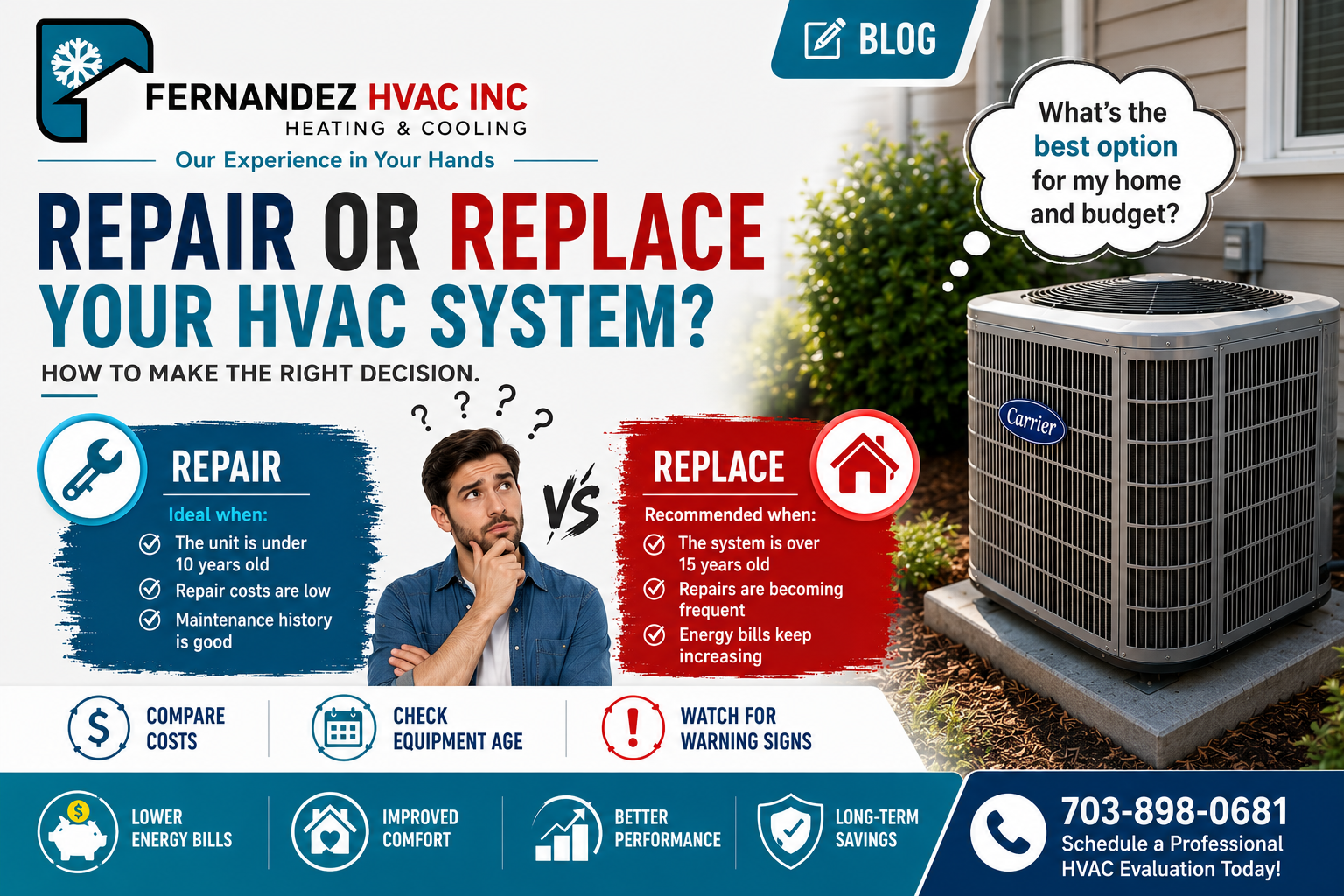
Repair or Replace Your HVAC System? How to Make the Right Decision
Your HVAC system is one of the most important investments in your home. When it starts having problems, many homeowners ask the same question:
Should I repair it or replace it?
The answer depends on several factors, including repair costs, the age of the equipment, and its overall performance. Here’s how to make the smartest decision for your comfort and budget.
-
Compare Repair Costs vs. Replacement Costs
Not every HVAC issue requires a full system replacement. Minor repairs such as replacing a capacitor, thermostat, or contactor are often affordable and can extend the life of your system.
However, if you’re facing major repairs—such as a compressor failure, refrigerant leak, or blower motor replacement—the costs can add up quickly.
A Good Rule of Thumb:
If the repair cost is more than 50% of the cost of a new system, replacement is usually the better long-term investment.
Replacing an older system may seem expensive upfront, but it can save you money through:
- Lower energy bills
- Fewer repair expenses
- Improved comfort
- Better indoor air quality
-
Consider the Age of Your HVAC System
The age of your equipment is one of the most important factors when deciding between repair and replacement.
Typical HVAC Lifespans:
- Air Conditioners: 10–15 years
- Heat Pumps: 10–15 years
- Furnaces: 15–20 years
If your system is less than 10 years old and has been properly maintained, repairing it is often the most cost-effective option.
If it’s approaching or exceeding its expected lifespan, replacement may be the smarter choice—especially if repairs are becoming more frequent.
-
Warning Signs It May Be Time to Replace
Your HVAC system may be telling you it’s ready for retirement.
Watch for these common indicators:
Frequent Repairs
If you’re calling for service multiple times each year, those repair bills can quickly exceed the value of keeping the system.
Rising Energy Bills
Older systems lose efficiency over time and consume more energy to maintain comfort.
Uneven Temperatures
Hot and cold spots throughout your home often indicate declining HVAC performance.
Strange Noises
Grinding, rattling, squealing, or banging sounds can signal major internal wear.
Poor Indoor Air Quality
Excess dust, humidity issues, and weak airflow may indicate an aging system struggling to perform.
Uses R-22 Refrigerant
If your system still uses R-22 refrigerant, repairs can become increasingly expensive due to limited availability.
-
Benefits of Replacing an Older HVAC System
Modern HVAC systems offer significant advantages compared to older equipment.
Improved Energy Efficiency
New high-efficiency systems can dramatically reduce monthly utility costs.
Better Comfort
Advanced technology provides more consistent temperatures and improved humidity control.
Increased Reliability
A new system means fewer unexpected breakdowns and repairs.
Manufacturer Warranties
Most new systems include strong warranty protection for added peace of mind.
Higher Home Value
A new HVAC system can increase your home’s appeal to future buyers.
Make the Right Choice with Fernández HVAC Inc.
Every home and HVAC system is different. That’s why it’s important to have a professional evaluation before making a decision.
At Fernandez HVAC Inc., we help homeowners compare repair and replacement options honestly and transparently. Our experienced technicians can assess your system and recommend the most cost-effective solution for your needs.
Schedule Your HVAC Evaluation Today
📞 703-898-0681
Whether you need a repair or are considering a system replacement, we’re here to help you make the right decision for your comfort and budget.
Fernandez HVAC Inc. – Our Experience in Your Hands


Recent Posts