Replace Your Air Conditioner Before It Fails: Why Waiting Could Cost You More
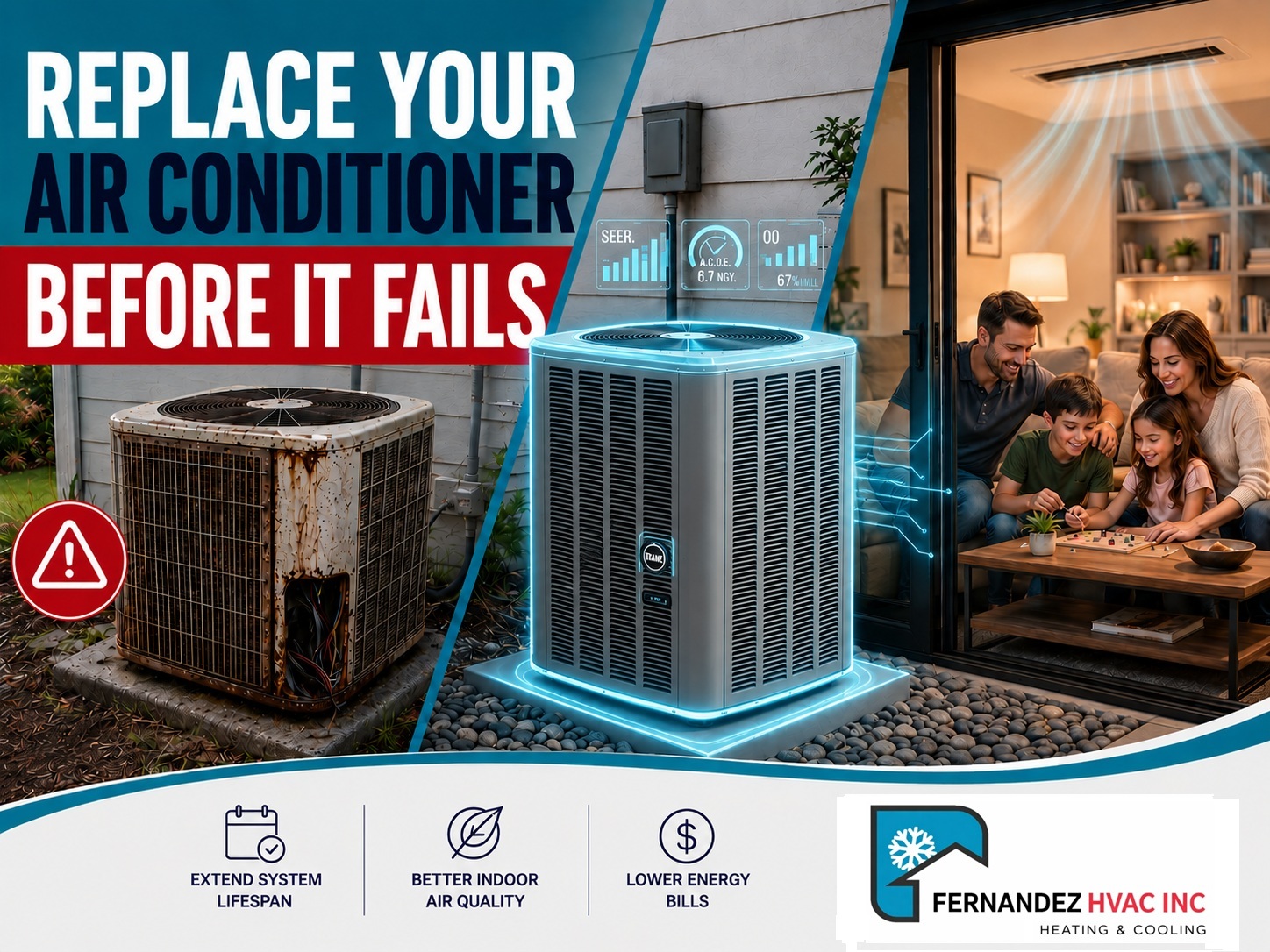
Replace your air conditioner before it fails to avoid costly repairs, reduce energy bills, and improve your home’s comfort. If your HVAC system is more than 10 years old, waiting until it completely breaks down could leave you with expensive emergency repairs and uncomfortable days without cooling.
The smartest time to replace your air conditioner is before it fails.
Why Replace Your Air Conditioner Before It Fails
Most air conditioning systems don’t stop working overnight. Instead, they show warning signs that they’re reaching the end of their lifespan. Ignoring these signs could leave you without cool air during the hottest days of summer, when HVAC companies are often at their busiest.
If your system is getting older, paying attention to these early warning signs can help you avoid unexpected problems and give you time to make the best decision for your home.
Signs It’s Time to Replace Your Air Conditioner Before It Fails
While every HVAC system is different, there are several common indicators that your air conditioner may be nearing the end of its useful life:
- Your HVAC system is over 10 years old.
- Your monthly energy bills continue to increase.
- Some rooms are too hot while others stay cool.
- Your AC requires frequent repairs.
- It runs longer than usual but doesn’t cool your home efficiently.
- You hear unusual noises or notice strange odors.
If your system is showing one or more of these signs, replacing it before it fails completely can help you avoid costly emergency repairs and restore your home’s comfort.
Save Money When You Replace Your Air Conditioner Before It Fails
According to ENERGY STAR, upgrading to a high-efficiency HVAC system can help reduce energy consumption and improve home comfort.
Choosing to replace your air conditioner before it fails can significantly reduce energy costs while helping you avoid unexpected breakdowns and expensive emergency repairs.
Older HVAC systems naturally lose efficiency over time. Even if they still cool your home, they often need to run longer and work harder to maintain the temperature you’ve selected. That extra effort usually means higher energy consumption and increased wear on important components.
A new high-efficiency HVAC system is designed to cool your home more effectively while using less energy. Depending on your current equipment, upgrading your system may provide:
- Lower monthly energy bills
- Improved cooling performance
- Greater energy efficiency
- More reliable operation
- Long-term savings
Although replacing an air conditioner is an investment, many homeowners find that the improved efficiency helps reduce operating costs over the life of the new system.
Avoid Expensive Emergency Repairs
Air conditioners are more likely to fail during periods of extreme heat—precisely when they’re working the hardest and when HVAC service companies receive the highest number of emergency calls.
Waiting until your system stops working could mean:
- Higher emergency repair costs
- Longer wait times for service
- Limited equipment availability
- Days without air conditioning during hot weather
Planning your HVAC replacement before an emergency allows you to explore your options, choose the right equipment for your home, and schedule installation at a convenient time.
Enjoy Better Comfort and Cleaner Air
Replacing your HVAC system isn’t just about staying cool. Modern air conditioning systems are designed to improve your home’s overall comfort while operating more efficiently.
A new system can provide:
- More consistent temperatures throughout your home
- Better airflow in every room
- Quieter operation
- Improved humidity control
- Cleaner indoor air when paired with advanced filtration systems
If you’ve noticed uneven temperatures, excessive humidity, or poor airflow, upgrading your HVAC system may significantly improve your indoor comfort.
Is It Better to Repair or Replace?
Many homeowners continue repairing an aging air conditioner in hopes of getting another season out of it. While repairs can certainly make sense for newer equipment, repeated service calls on an older system often become more expensive over time.
If your air conditioner is more than 10 years old and repair costs continue to add up, replacing the system may be the more cost-effective long-term solution.
A modern HVAC system offers improved reliability, lower operating costs, greater energy efficiency, and manufacturer warranty protection—benefits that can make a noticeable difference over the years.
Still unsure whether repairing or replacing your HVAC system is the right choice? Read our article, Repair or Replace Your HVAC System? How to Make the Right Decision, for expert guidance before making your investment.

Trust Fernandez HVAC
At Fernandez HVAC, we proudly serve homeowners throughout Virginia, Maryland, and Washington, D.C. with professional HVAC installation, air conditioner replacement, repair, and maintenance services.
Our experienced technicians take the time to evaluate your current system, explain your options, and recommend solutions based on your home’s specific needs. Whether you’re replacing an aging air conditioner or looking to improve your home’s energy efficiency, we’re committed to providing honest recommendations and quality workmanship.
Have Questions About Replacing Your Air Conditioner?
If your air conditioner is getting older or requiring frequent repairs, it may be time to consider your options. If it no longer keeps your home comfortable, replacing it could be the best solution.
Replacing your HVAC system before it fails can help you avoid unexpected breakdowns, improve energy efficiency, and enjoy more reliable comfort throughout the year.
If you’d like professional guidance or want to learn more about today’s energy-efficient HVAC systems, contact Fernandez HVAC today. Our team is here to answer your questions and help you determine the best solution for your home.
📞 Call Fernandez HVAC at (703) 898-0681 to speak with one of our HVAC professionals.


Recent Posts